
Loading...
Serving Plantation, FL and surrounding areas. (754) 318-0003
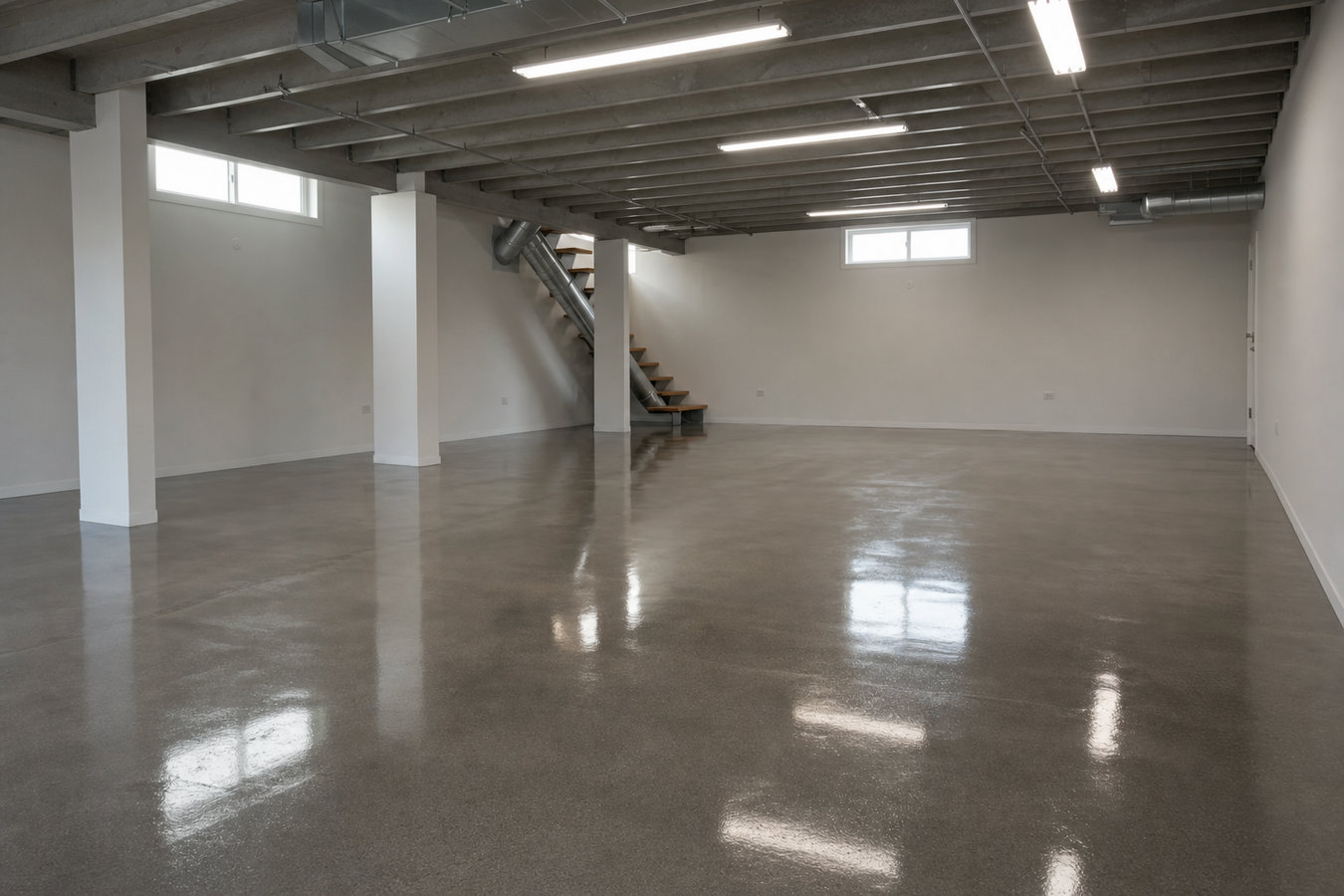
Most Plantation slab floors fail because of what is underneath them - not the product on top. We test your slab for moisture before anything goes down, so your new floor actually lasts.
Basement flooring in Plantation refers to any coating or overlay system installed over a concrete slab at or near ground level - garages, utility rooms, bonus spaces, and enclosed patios - with moisture control as the first priority, and most jobs completing in two to four days. Most homes here do not have traditional basements, but the flooring challenge is the same: concrete slabs in Broward County sit close to a water table that pushes moisture upward year-round.
Plantation was built largely between the 1950s and 1980s, and most of those slabs are now 40 to 60 years old. They have had decades of wear, settling, and moisture exposure - which is why proper prep and moisture testing matter more here than in almost any other market. A contractor who skips that step and goes straight to applying a coating is almost certainly setting you up for a floor that fails within a year. For a fuller picture of what goes into good slab preparation, our concrete grinding and surface preparation service covers what that process actually involves.
If you are converting a garage or utility room into a living space, the right floor coating also needs to meet Broward County's permit requirements for change of use. We know when a permit applies and handle the paperwork - so your investment is protected on paper, not just on the floor surface.
That white powder is called efflorescence - it is mineral salt left behind when moisture pushes up through the concrete and evaporates. In Plantation's high-water-table environment, this is a common sign that your slab is actively wicking moisture from the ground. If you are noticing it, your floor needs a proper moisture-resistant coating before any other flooring goes down.
If tile is popping off, vinyl is bubbling, or paint is flaking, the slab beneath is almost certainly the culprit - not the flooring material itself. This is especially common in older Plantation homes where flooring was installed without proper moisture testing or surface prep. Replacing the surface without addressing the slab first will just repeat the problem.
Many Plantation homeowners are turning garages into home offices, gyms, or playrooms - and a bare concrete slab is not comfortable or attractive for those uses. A coated or overlaid concrete floor transforms the space without raising the floor height, which matters when you are tying into existing doorways and transitions. It is also far more durable than carpet or laminate in a space that still sees foot traffic, spills, or humidity.
Small cracks are normal in aging concrete, but left unaddressed they collect dirt, allow moisture in, and get worse over time. If you can see cracks wider than a hairline, or if the surface feels rough and uneven underfoot, it is worth having a contractor assess whether a repair and coating system makes sense. Catching this early is much cheaper than waiting until the damage spreads.
We work with polyurea, epoxy, and concrete overlay systems - choosing the right product based on how you use the space, the condition of your slab, and the climate conditions your floor will face. For most Plantation garages and utility rooms, polyurea is the better long-term choice because it stays hard in Florida's extreme summer heat and cures faster than traditional epoxy. Both systems bond directly to the slab with no gap underneath, which eliminates the moisture problem that destroys tile adhesive and laminate underlayment. These services complement our epoxy floor coatings for homeowners who want to compare system options side by side.
For slabs with visible surface damage - old adhesive residue, cracks, pitting, or rough patches - we handle repair and preparation as part of the same project. There is no point in applying a high-quality coating to a poorly prepared surface. The American Concrete Institute sets the professional standards for how concrete prep should be done, and following those guidelines is what separates a floor that lasts ten years from one that starts peeling in twelve months. We also carry decorative options - color broadcast flakes, metallic finishes, and custom color selections - for homeowners converting a garage into a space they actually want to spend time in.
Suits Florida garages and utility rooms - stays hard in extreme heat, cures faster than epoxy, and holds up to South Florida's sustained humidity and temperature swings.
Suits interior spaces with moderate temperature control - a durable, cost-effective option with a wide range of color and flake finishes for a clean, professional look.
Suits slabs with surface wear, staining, or minor damage - overlays bond directly to the existing concrete and can be finished smooth, textured, or with decorative color.
Suits any slab with visible cracks, old adhesive, or surface contamination - proper prep is the single most important factor in how long your new floor lasts.
Plantation sits just a few feet above sea level on land that was originally Everglades marsh, and the water table in Broward County is notoriously high - sometimes just a foot or two below the surface. This means moisture is constantly pushing up through concrete slabs from below, a process called vapor transmission. If a contractor does not test for this before installing your floor, you could end up with a beautiful new surface that starts peeling or growing mold within a year. The rainy season runs from June through September, and daily afternoon storms can keep ground moisture levels elevated for months. Booking your project during the dry season - roughly November through April - gives you the most predictable outcome and the most available contractor schedules. Homeowners in nearby Davie face identical conditions, and we work across the area with the same moisture-first approach.
South Florida's summer heat adds a second layer of complexity. An enclosed garage in Plantation can reach extreme temperatures in July and August, and standard epoxy coatings are known to soften under sustained heat - which is why we recommend polyurea for spaces that are not climate-controlled. Homeowners in Pembroke Pines ask us the same question regularly, and the answer is always the same: match the product to the climate, not just the look.
When you reach out, we ask a few basic questions - the size of the space, what is on the floor now, and what you are hoping to use the room for. This helps us give you a realistic ballpark before anyone drives to your home. We respond to all inquiries within one business day.
We visit your home to look at the slab in person. We check for cracks, test for moisture, and assess the condition of the surface. A written quote follows within a day or two. A contractor who skips the moisture test is a red flag - that step is how we know what prep work your specific slab actually needs.
We grind the concrete surface to open it up, fill any cracks, and remove old adhesive or paint. This is the most important day of the project - the bond that makes your new floor last comes from this step. Expect noise, dust contained by our equipment, and the crew on-site for most of the day.
Once the slab is prepped, the coating goes on in layers - base coat, any decorative elements, and a clear protective top coat. Most coatings are safe for light foot traffic within 24 hours. We walk the finished floor with you, point out any areas to watch, and explain how to clean and care for the surface before we leave.
Free on-site assessment. We test your slab for moisture before recommending any product or price.
(754) 318-0003Plantation's high water table means moisture pushing up through slabs is the most common cause of flooring failure here. We test every slab before we coat it. A contractor who skips this step and goes straight to a price quote is setting you up for a floor that fails in months - not years.
We know when a Broward County project requires a permit and when it does not. If you are converting a garage into living space, we will tell you upfront what the process involves and handle it with you - so there are no surprises when you go to sell your home later.
Not every coating holds up in a Florida garage that reaches extreme temperatures in summer. We use polyurea and other high-performance systems specifically suited to the heat and humidity here - not products designed for cooler, drier climates that happen to be installed in South Florida.
We do not quote prices over the phone without seeing your slab. Every estimate is written and covers prep, coating, and any crack repair - so the number we give you is the number you pay. Older Plantation slabs often need more prep, and we account for that before we start.
These are not just selling points - they are the specific things that separate a floor that holds up in South Florida from one that fails. If you want to verify our credentials before calling, Florida contractor licenses are searchable through the Florida Department of Business and Professional Regulation - a licensed contractor should have no problem with you checking.
Professional slab grinding and prep work before any coating, overlay, or new flooring system goes down.
Learn MoreDurable epoxy systems for interior slab floors in a wide range of colors, flakes, and finish levels.
Learn MoreDry-season project slots fill up fast - if you are planning a garage conversion or floor coating for spring, now is the time to get on the schedule.